The hospitality industry is evolving faster than ever. Travelers are no longer discovering resorts only through Online Travel Agencies (OTAs). Today, booking decisions are influenced by Google Search, AI-powered search engines, social media content, reviews, videos, and direct recommendations. As competition grows across destinations, resort owners must adopt smarter marketing strategies to stay visible and increase bookings.
If you’re a resort, villa, homestay, or holiday home owner looking to grow your business, understanding the latest resort marketing trends can help you improve occupancy, increase direct bookings, and build a stronger brand presence.
Why Traditional Resort Marketing is No Longer Enough
A few years ago, listing a property on major OTAs was often enough to generate bookings. Today, thousands of properties compete for the same travelers, making visibility more challenging than ever.
Modern travelers typically:
- Search on Google before booking
- Compare multiple properties
- Read guest reviews
- Explore Instagram and YouTube content
- Ask AI platforms for recommendations
- Visit property websites before making decisions
As a result, successful resort marketing now requires a combination of digital visibility, brand building, and revenue optimization.
1. Invest in Search Engine Optimization (SEO)
Search Engine Optimization remains one of the most effective long-term marketing strategies for resorts.
When travelers search for terms like:
- Best resorts in Munnar
- Villas in Ooty
- Beach resorts in Varkala
- Family resorts in Kerala
Your property should appear prominently in search results.
Effective SEO Strategies
- Destination-focused content
- Location-specific landing pages
- Blog articles targeting traveler questions
- Optimized property descriptions
- Fast-loading mobile-friendly websites
- Local SEO optimization
Properties with strong SEO often generate consistent direct bookings while reducing dependence on paid advertising.
2. Create Helpful Destination Content
Travelers frequently search for information before choosing accommodation.
Popular searches include:
- Things to do in Munnar
- Places to visit in Ooty
- Best time to visit Thekkady
- Monsoon destinations in Kerala
Creating useful destination guides helps attract potential guests early in their travel planning journey.
Content Ideas
- Travel itineraries
- Weekend getaway guides
- Family travel recommendations
- Monsoon travel guides
- Destination FAQs
Helpful content not only improves search rankings but also builds trust with travelers.
3. Optimize for AI Search and GEO
Search behavior is changing rapidly. More travelers now use AI tools to ask questions like:
- What are the best resorts in Kerala for families?
- Which hill station is best during the monsoon?
- Where should I stay in Munnar for tea plantation views?
This shift has introduced a new approach called Generative Engine Optimization (GEO).
GEO Best Practices:
- Answer questions clearly
- Create detailed destination guides
- Use structured headings
- Add FAQs
- Publish authoritative content
- Keep information updated
Properties that optimize for AI search are more likely to appear in AI-generated travel recommendations.
4. Focus on Direct Bookings
Direct bookings often provide better profitability compared to OTA bookings.
Benefits of Direct Bookings:
- Lower commission costs
- Better guest relationships
- Higher profitability
- Greater control over pricing
- Improved repeat bookings
A well-designed website combined with SEO and content marketing can significantly increase direct reservations.
5. Build a Strong Social Media Presence
Travel is one of the most visual industries in the world.
Guests want to see:
- Room interiors
- Scenic views
- Food experiences
- Swimming pools
- Sunsets and landscapes
- Guest activities
Platforms like Instagram, Facebook, and YouTube help properties showcase experiences and inspire bookings.
Content That Performs Well:
- Drone videos
- Room tours
- Guest testimonials
- Monsoon reels
- Local experiences
- Destination highlights
Consistency is often more important than viral content.
6. Use Professional Photography and Video Content
Poor visuals can significantly reduce booking conversions.
Professional content helps travelers imagine their stay before they arrive.
Essential Visual Assets:
- Property photography
- Room photography
- Aerial drone shots
- Experience videos
- Destination highlights
- Guest activity coverage
Quality visuals improve performance across websites, OTAs, social media, and advertisements.
7. Manage Online Reviews Proactively
Reviews play a major role in booking decisions.
Most travelers compare ratings before making a reservation.
Best Practices:
- Respond to every review
- Address guest concerns professionally
- Encourage satisfied guests to leave feedback
- Showcase positive experiences
Strong review management builds credibility and improves booking conversion rates.
8. Use Data-Driven Revenue Management
Marketing is not only about attracting guests—it’s also about maximizing revenue.
Modern resorts use data to:
- Adjust pricing dynamically
- Analyze booking patterns
- Identify demand periods
- Improve occupancy
- Increase average room revenue
A combination of marketing and revenue management often delivers the best results.
9. Promote Experiences, Not Just Rooms
Travelers increasingly book experiences rather than accommodation alone.
Instead of focusing only on rooms, highlight:
- Plantation walks
- Backwater cruises
- Wildlife experiences
- Heritage stays
- Village tours
- Adventure activities
- Wellness experiences
Unique experiences help properties stand out in a competitive market.
10. Partner with a Professional Hospitality Management Company
Many property owners struggle with marketing because it requires expertise across multiple channels.
A professional hospitality management partner can help with:
- Digital marketing
- OTA management
- Revenue optimization
- Website development
- SEO and GEO strategies
- Guest acquisition
- Brand building
This allows owners to focus on property operations while experienced professionals manage growth and visibility.
The Future of Resort Marketing
The future belongs to properties that combine:
- Strong digital visibility
- Direct booking strategies
- AI search optimization
- Quality content
- Professional branding
- Exceptional guest experiences
As traveler behavior continues to evolve, resorts that adapt early will have a significant competitive advantage.
How VOYE HOMES Supports Resort Growth
At VOYE HOMES, we work with resort owners, villa owners, heritage properties, homestays, and holiday homes across South India and the UAE to improve visibility, occupancy, and revenue.
Our approach combines hospitality expertise, digital marketing, OTA management, SEO, GEO optimization, direct booking strategies, and revenue management to help properties reach their full potential.
Whether you’re operating a boutique villa, plantation resort, beach property, heritage stay, or holiday home, the right marketing strategy can transform your property’s performance and unlock sustainable long-term growth.
Conclusion:
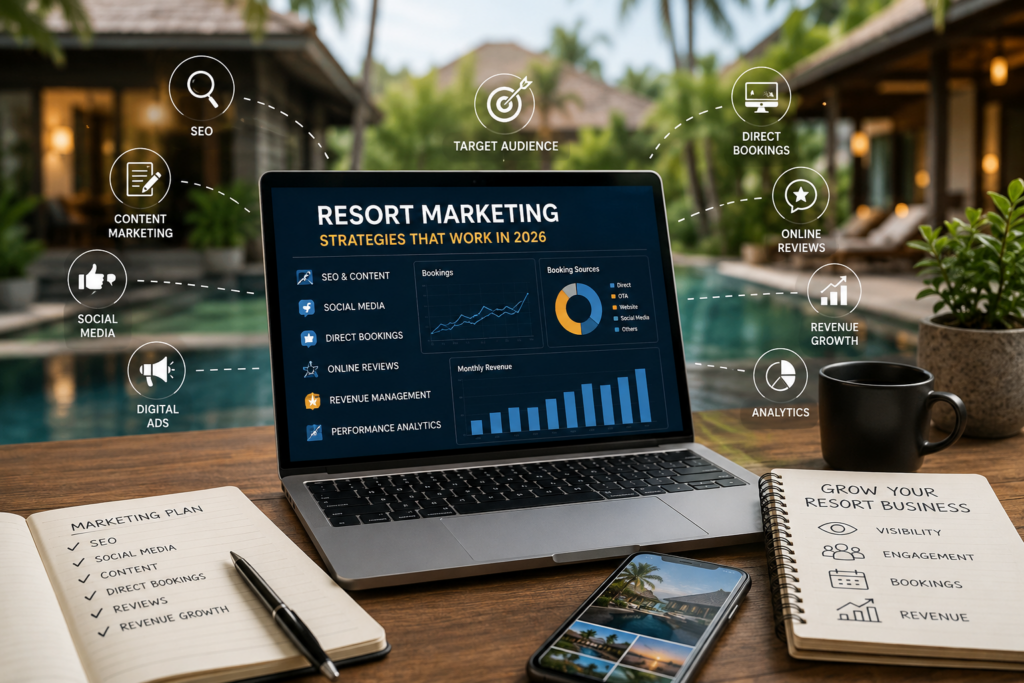
Resort marketing in 2026 is no longer about simply listing a property online. Success comes from combining SEO, AI search optimization, content marketing, social media, review management, revenue strategies, and direct booking growth.
Property owners who invest in these modern marketing approaches will be better positioned to attract guests, increase occupancy, and build a strong hospitality brand in an increasingly competitive market.